
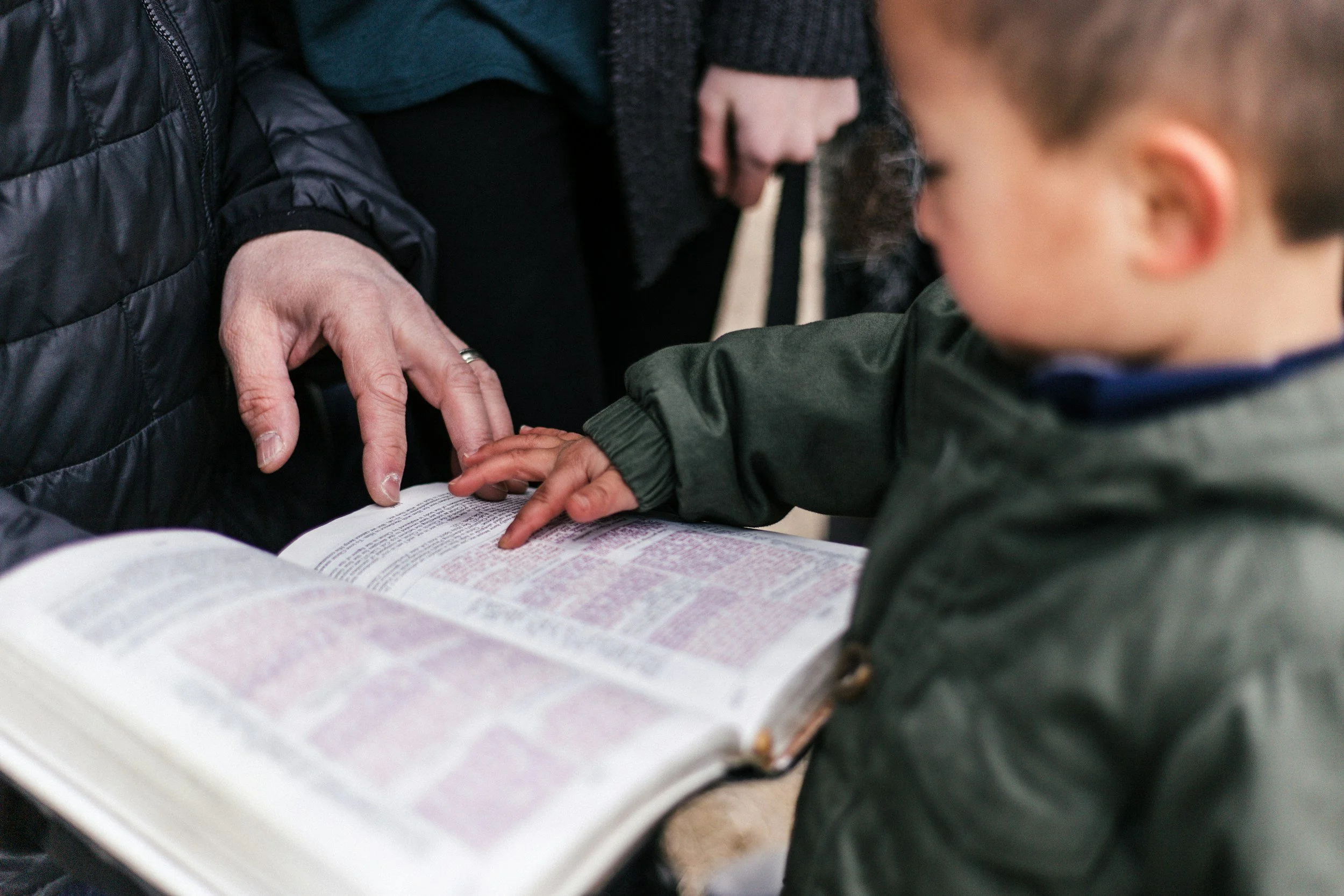
For many parents, the desire to raise children with faith feels both meaningful and overwhelming—especially in the early years. How do you introduce something as big as the Bible to such little hearts and minds?
The good news is this: it doesn’t have to be complicated. In fact, with children under five, the most powerful approach is often the simplest one. Bringing the Bible into your home is less about formal lessons and more about creating small, consistent moments rooted in love, connection, and curiosity.
Using the New International Version (NIV) can be a wonderful foundation, especially when paired with age-appropriate explanations and everyday application.
Start small and keep it simple
Young children have short attention spans—and that’s okay. Bible time doesn’t need to be long to be meaningful. Reading just one short verse or a small portion of a story is enough. What matters most is helping your child connect to a single, clear idea.
For example, you might read:
“God is love.” (1 John 4:8, NIV)
Then simply ask:
“What does love look like?” or “How can we show love today?”
These small conversations plant big seeds over time.
Build it into your daily routine
Children thrive on routine, so one of the easiest ways to make the Bible part of your home is to attach it to something you already do.
Try:
• Reading a short verse before bedtime
• Saying a prayer at the breakfast table
• Talking about God during driving to and from school
Consistency matters far more than perfection. Even a few minutes each day creates a sense of comfort and familiarity.
Make it understandable for little minds
While the NIV is a clear and trusted translation, young children often need help understanding what they hear. You can gently “translate” the meaning into simple, relatable language.
For example:
• “The Lord is my shepherd” (Psalm 23:1, NIV)
becomes
“God takes care of you just like a shepherd takes care of sheep.”
This helps children connect emotionally to the message, not just hear the words.
Keep prayer natural and short
Prayer doesn’t need to be formal or memorized to be meaningful. For young children, it should feel like talking to a loving, trusted friend.
A simple structure works beautifully:
• Thank you: “Thank you, God, for today.”
• Help me: “Help me be kind.”
• I love you: “I love you, God.”
You can model prayer first, then invite your child to join in. Don’t worry if their words are silly, short, or unexpected—that’s part of the beauty.
Use repetition to build confidence
Children learn through repetition, and they often find comfort in it.
Choose a few short verses and repeat them regularly:
• “God is love.” (1 John 4:8)
• “Give thanks to the Lord.” (Psalm 107:1)
• “Be kind and compassionate.” (Ephesians 4:32)
Over time, your child will begin to remember these truths—and carry them into daily life.
Bring faith into everyday moments
Faith doesn’t need to stay within “Bible time.” Some of the most meaningful moments happen naturally throughout the day.
• On a walk: “Look at the trees God made!”
• During play: act out a Bible story with toys
• In real-life situations: “We share because God teaches us to be kind.”
These connections help children see that faith is part of life—not separate from it.
Use play, movement, and creativity
Young children learn best through doing, not just listening.
Try:
• Drawing pictures of Bible stories
• Acting out stories with stuffed animals
• Adding simple motions to verses
When children move and create, they engage more deeply—and remember more.
Lead by example
One of the most powerful ways to bring the Bible into your home is simply by living it out.
Let your children see you:
• Pray in everyday moments
• Speak with kindness and patience
• Turn to faith during both joy and challenges
Children are always watching, and your example will shape their understanding more than any single lesson.
Embrace imperfection
Some days will feel rushed. Some routines will be skipped. Your child might not sit still or seem interested.
That’s okay. What matters most is creating a home where talking about God feels natural, safe, and filled with love—not pressure or perfection.
Going to church is another way to bring God and the Bible into your family routine.
Find a church that is family-focused and has great children, youth, and adult programs.
Final thoughts
In the early years, faith isn’t built through long lessons—it’s built through small, consistent moments of connection.
By keeping things simple, weaving the Bible into daily life, and modeling a genuine relationship with God, you are laying a strong and lasting foundation for your child’s faith.
And remember it’s not about doing it perfectly—it’s about showing up, again and again, with intention and love.
Here are some great books to add to your family's library that are Biblical.
https://a.co/d/01z5S5HI (great for infants and young toddlers, more books like this in her series)
https://a.co/d/0gFJjBiS (great for toddlers, preschoolers, and beyond. One of the books from the fruit of the spirit series)
https://a.co/d/0hrhOAKy (this is a great Biblical book with great pictures)